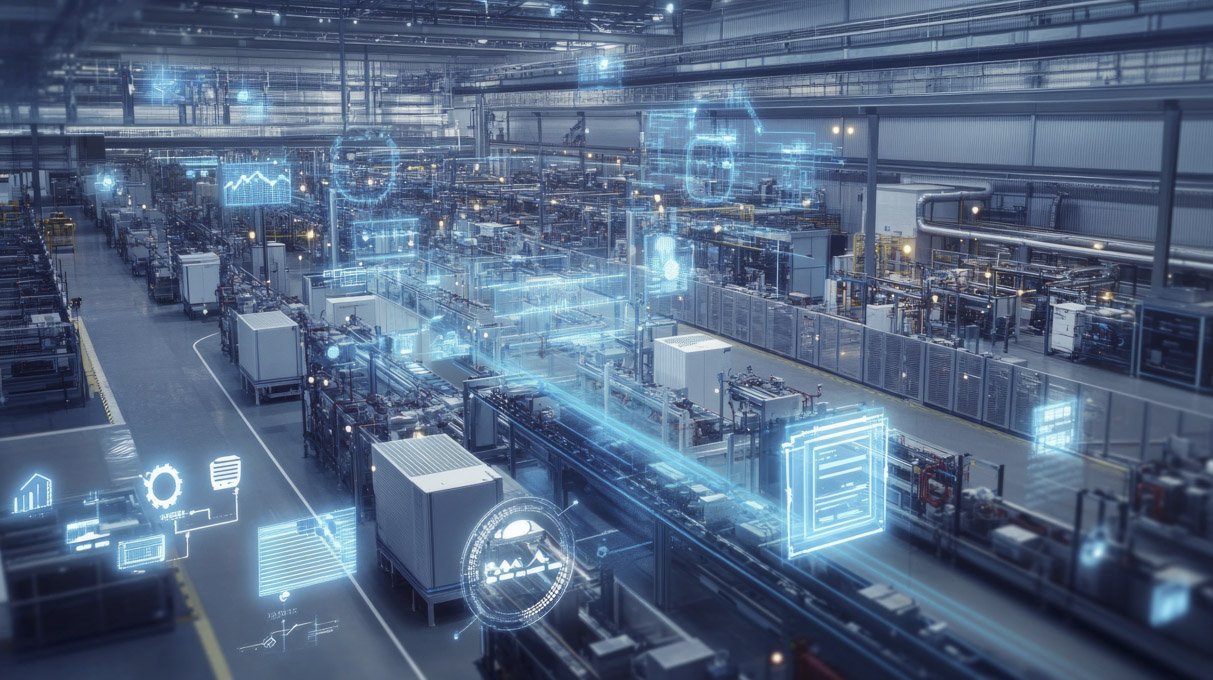
The Asia-Pacific region has one of the highest concentrations of fabricated metals manufacturers in the world. As demand grows, cost efficiency, quality management, and traceability become critical to staying competitive and profitable.
Many governments are also incentivizing investment in energy-efficient solutions, which adds another layer of complexity for managers trying to keep machines productive while monitoring performance in these key areas. A modern, manufacturing-focused ERP system can bring this information together in one place.
Managing costs
Labor and machinery must run efficiently and close to capacity for the factory to operate profitably. Many manufacturers are increasing automation to counter skilled labor shortages, and modern machines are typically fitted with real-time sensors. However, this data only becomes useful when it is collected, consolidated, and turned into meaningful insights for action.
Material cost control requires a clear understanding of procurement behavior and how long materials sit in inventory before they are used to generate revenue. That means having visibility into purchasing decisions, supplier performance, and current inventory value.
An ERP system unifies this information and makes it accessible to authorized users. With standard reports and embedded analytics, managers can quickly:
-
See shop floor productivity and related costs.
-
Review procurement practices and inventory costs to manage them more effectively.
-
Confirm that accurate costings are used in estimating and quotations so profitability is maintained.
Managing quality
As market demand accelerates, many metal fabricators are handling a higher volume of work orders. To meet these demands, they must maintain a high rate of production without compromising quality, which can be challenging.
Quality needs to be controlled at three points: when materials arrive, as products are made on the shop floor, and before finished goods are shipped to customers. A quality management system helps ensure incoming materials meet required standards and that only products that satisfy customer expectations leave the factory.
By integrating machine sensor data with ERP, managers and staff can see how much work in progress ends up as rework or scrap. This information feeds into costing analysis and helps assess equipment profitability.
Traceability
To improve efficiency and meet compliance requirements, manufacturers must track materials from origin through production to final delivery. Few fabricated metals manufacturers currently achieve full end-to-end traceability, which exposes them to regulatory risk and reliability issues that can harm customer satisfaction and future orders.
An ERP system with integrated data provides insights that make it easier to trace and analyze where defects occur. Managers can use this information to assess supplier performance and better understand the costs and risks associated with potential recalls when products do not meet required standards.
Ensuring sustainability
Metal fabricators are increasingly looking at the sustainability of their operations and the environmental impact of their products. This includes not only energy efficiency but also how to reduce waste.
An ERP system is a repository of data from all functions of the business, as well as external systems, allowing managers to have insight into optimizing processes, monitor plant operations for energy usage, and improve sustainability. Having a wider view of issues across the supply chain gives greater insight into streamlining sustainability operations.
Bringing it all together
Fabricated metal manufacturers must balance higher production to meet demand with optimizing capacity, improving throughput, cutting costs, and reducing waste. Achieving this balance is far easier with a modern, manufacturing-oriented ERP system.
Such a system provides the information finance and operations leaders need to monitor and analyze business performance and make informed decisions that support a profitable, sustainable operation.