For manufacturers, rapid growth is the goal. But surging order volumes and faster production lines often create visibility gaps: fragmented data, inconsistent forecasting and delayed decisions across the floor and supply chain. Real-time visibility for manufacturing operations closes those gaps. It’s the same gap that shows up as five warning signs on the shop floor when it isn’t addressed.
Delayed or siloed information is exactly why real-time visibility for manufacturing operations matters.
What does real-time visibility for manufacturing operations really mean?
Real-time visibility for manufacturing operations means having a live, accurate view of your entire production operation as events happen. It turns data from a historical record into a tool you can act on now.
In practical terms, this begins with end-to-end traceability, enabling tracking of a product’s full lifecycle from the shop floor to the customer’s door. As a result, stakeholders can receive continuous updates from the raw material stage through to final packaging, transit and delivery.
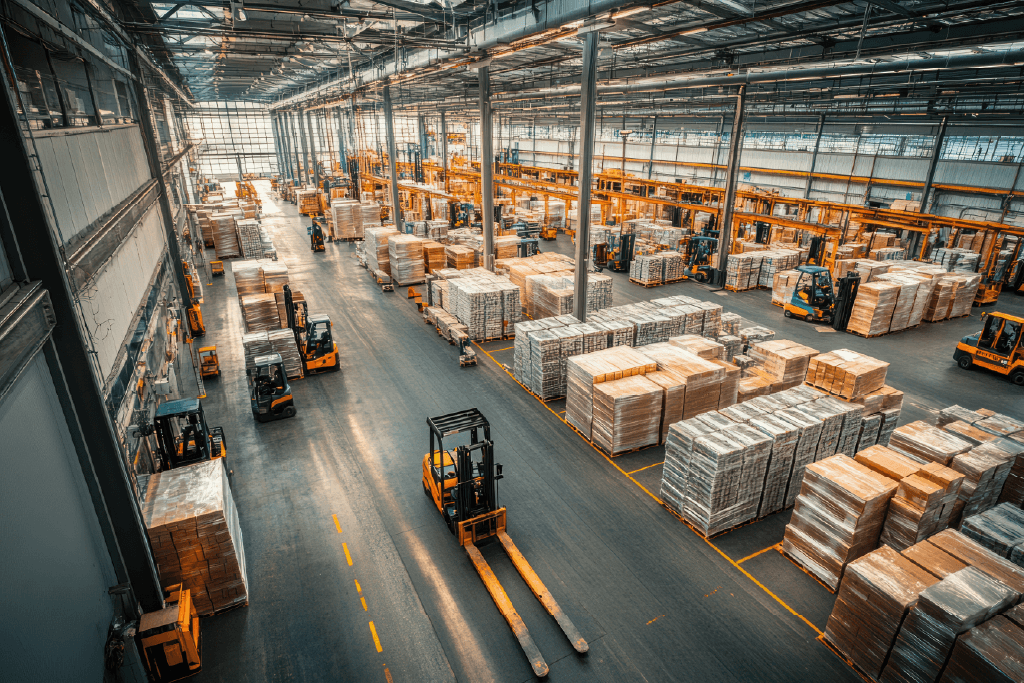
This feeds directly into company-wide inventory management, giving a single view of all stock levels across every location.
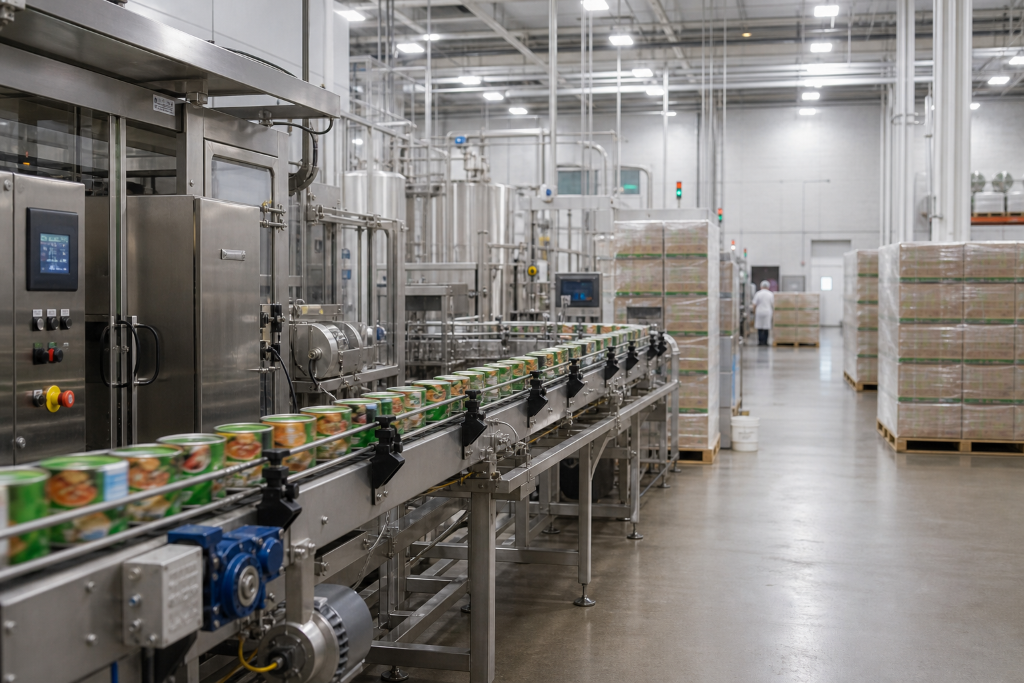
With real-time visibility, orders are tracked through key production gates, and order batches are checked against scheduling deadlines. High-level bottlenecks and quality delays are flagged before they impact the final shipping commitment.
All of this feeds into live financial tracking by connecting what happens on the floor to the numbers that matter.
What is the business impact of real-time visibility?
Implementing real-time visibility for manufacturing operations unlocks a range of strategic advantages that directly protect the bottom line during rapid growth.
Better cost control
By capturing exact costs as they occur, leadership can prevent budget overruns and stabilize margins before a production run finishes.
Improved on-time delivery
Ensures production timelines stay synchronized with shipping schedules, allowing teams to dynamically adjust floor priorities to protect delivery commitments.
Faster decision-making
Live operational dashboards empower managers to make critical pivots regarding labor allocation, machine scheduling and order prioritizing in minutes rather than days.
Reduced waste and rework
Real-time monitoring catches machine deviations or material defects on the first few units, preventing entire batches from being ruined and minimizing scrap costs.
Enhanced customer service
Accurate, live data allows sales and service teams to provide customers with precise order timelines and immediately alert them to changes, building long-term trust.
Working capital optimization
Having absolute certainty over inventory locations and quantities allows manufacturers to operate lean, freeing up cash that would otherwise be trapped on warehouse shelves.
Proactive risk mitigation
Live visibility acts as an early-warning system, giving managers the lead time needed to reroute logistics, shift production schedules or source alternative materials before a disruption halts the factory floor.
Real-time visibility for manufacturing operations protects the bottom line during rapid growth in four key ways:
- Cost control and working capital. Exact costs are captured as they happen, so leadership can spot overruns before a run finishes. Similarly, accurate stock data means less cash tied up on shelves and more flowing through the business.
- On-time delivery and buyer trust. Schedules stay linked. Teams can shift floor priorities to protect commitments, and sales can give buyers dates backed by live data. Consequently, trust builds with every order that lands on time.
- Faster decisions, less waste. Live dashboards let managers adjust labor, scheduling and order priority in minutes. In addition, real-time monitoring catches machine issues or defects early, cutting scrap and rework.
- Early warning on risk. Live data acts as an alert system, giving managers lead time to reroute, shift production or source new materials before a problem hits the floor.
How Aluminium Industries achieved this visibility
With exceptional growth of 250% over the years, Australian manufacturer Aluminium Industries implemented a unified Syspro ERP solution to automate reporting, tighten controls and handle the complexity of running multiple divisions.
Unbound Systems, Aluminium Industries’ software development division, developed ecommerce solutions such as field ordering tools using Syspro’s built-in Business Objects layer. These solutions enable real-time data capture and provide decision-makers with access to the system from anywhere.
Aluminium Industries uses Syspro to manage all aspects of the business, from financials to sales order management, job production, inventory control and customer pricing. This has enabled the company to triple in size without any need for additional administrative staff.
Jacob Kowalewski, General Manager of Unbound Systems, says: “Syspro’s Business Objects layer uses ERP principles to communicate and to push and pull data. Because the data is captured in Syspro, we can rely on its absolute accuracy. It’s been transformative to build our software around this architecture.”
The implementation has automated workflow and multiple manual processes, delivering a marked improvement in customer service. As Chief Technical Officer Lee Brown says: “Syspro is our single source of truth, enabling us to run our business in real time and consistently deliver orders on schedule.”
Get the full story on how Aluminium tripled in size without adding staff here.
Real-time visibility in action
Implementing real-time visibility for manufacturing transforms abstract shop floor data into a highly responsive asset that optimizes every stage of the business. For example, production planning adapts instantly to floor realities instead of running rigid weekly plans. This allows planners to automatically re-route jobs around unexpected machine breakdowns or prioritize hot orders without disrupting the broader factory workflow.
On the inventory management front, real-time visibility drives automated replenishment and accurate stock balancing. Live data triggers instant alerts when raw materials hit reorder thresholds and tracks WIP through every stage, eliminating phantom inventory and sudden shortages.
From a cost control perspective, live margin variances can be identified during active production runs. By tracking the immediate consumption of labor hours and raw materials against standard costs, managers can flag overruns instantly and adjust operations before a job becomes unprofitable.
Precise delivery dates can also be guaranteed at the point of sale. Sales and logistics systems pull live data on current machine capacity, material availability and shipping timelines, allowing teams to quote reliable lead times and automatically alert customers to shifts.
Real-time visibility supports strategic decision-making by powering long-term capital expenditure and expansion modeling. Leadership can analyze accurate historical trends of actual machine utilization, true labor capacity and product line profitability to confidently decide when to buy new machinery or open a new facility.
How to build your visibility strategy
Building a real-time visibility strategy means shifting from reactive decisions to data-driven control. Here are a few steps for manufacturers looking to get started.
- Define the key operational data points that drive your business goals.
- Assess current visibility gaps: Audit your data landscape to pinpoint operational blind spots and information bottlenecks. Map where data flows freely, where manual spreadsheet workarounds create delays and where siloed software systems fail to communicate with each other.
- A manufacturing ERP like Syspro integrates with your existing shop-floor hardware, offers live dashboards and grows alongside your production volume.
- Deploy tools like IoT sensors, barcode scanning and machine integrations to replace paper logs and manual data entry with a single source of live data.
- Train operators, supervisors and leaders to read live dashboard alerts and use real-time data to resolve bottlenecks, adjust schedules and catch floor issues before they escalate.
Real-time visibility: A competitive advantage for manufacturers
Real-time visibility turns operations from reactive to responsive. While competitors manage off yesterday’s reports, manufacturers with live data protect margins, optimize capacity and hit delivery dates.
To achieve this edge, manufacturers should leverage purpose-built platforms, such as industry-specific ERP solutions, which provide a scalable foundation for growth.
Assess your visibility gaps today. Our manufacturing ERP specialists will help you audit your shop floor, identify where manual data lag is stalling decisions and pinpoint the blind spots threatening your growth. Click here to book a demo.