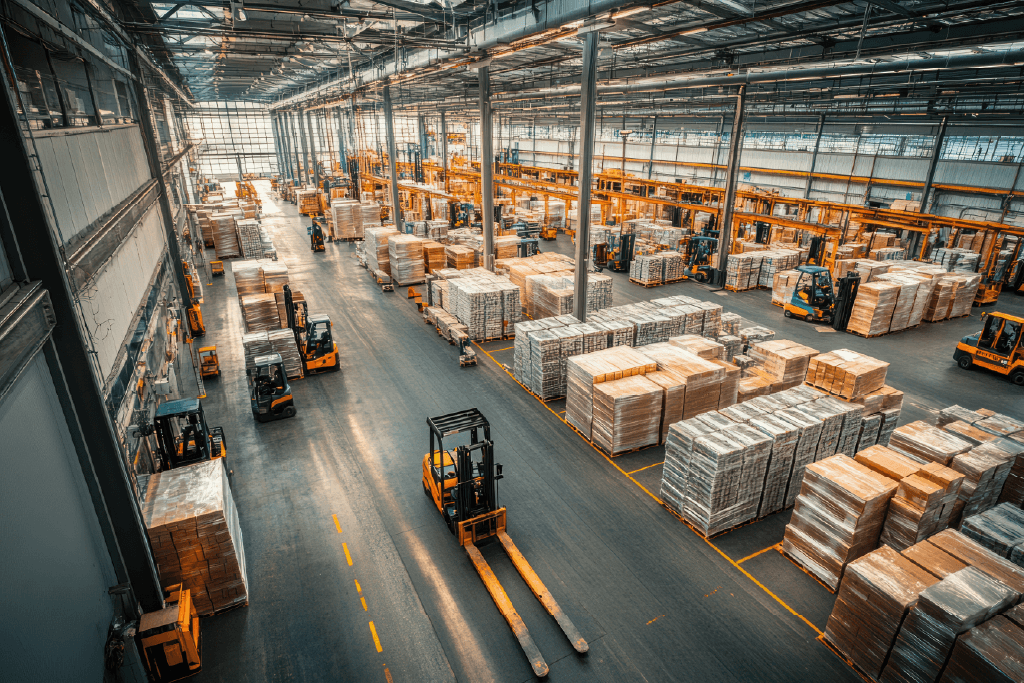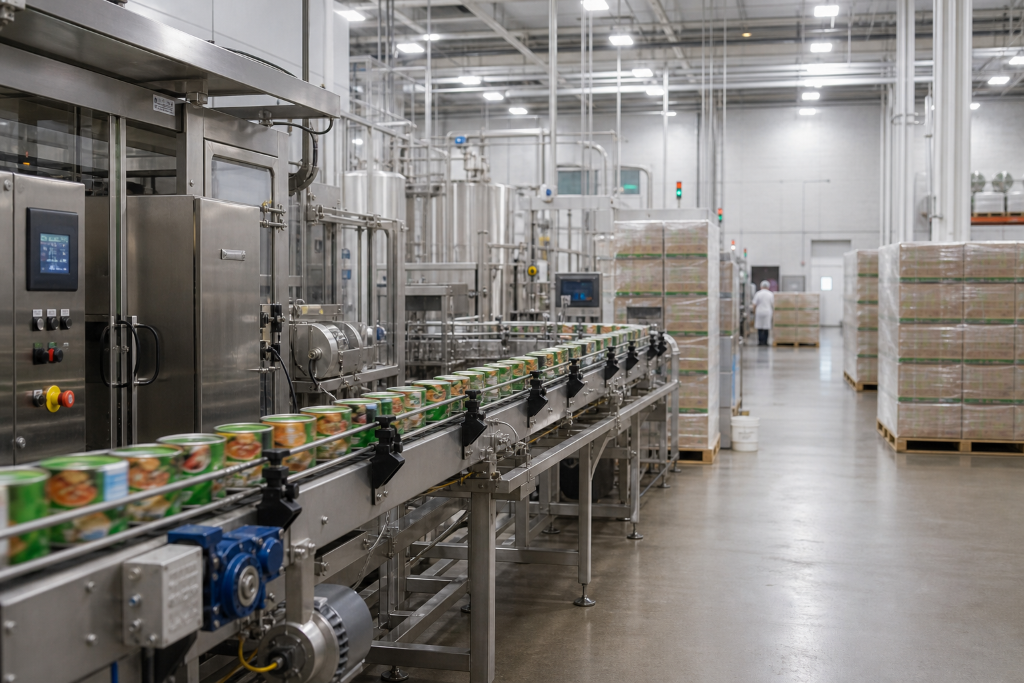
Inventory provides a buffer between uncertain demand and supply, but it comes at a cost. Stock ties up cash and working capital, consumes space, and impacts return on assets, which is why rising inventory costs are now viewed as a major business risk.
In a recent survey, 40% of respondents mentioned rising inventory costs as a top business risk. So if inventory costs money and negatively impacts cash flow, why not just reduce it?
Too little inventory also creates problems for manufacturing, customer service, and maintenance. The role of inventory management is to balance the need to hold stock against the cost of doing so, and inventory optimization is the technique that helps determine how much to hold in the face of changing demand.
The role of inventory management
Spreadsheets may be enough for very small manufacturers with limited items, simple storage, and few orders. As environments become larger and more complex, a dedicated inventory management system is needed to capture, process, and report on stock movements in near real time.
Inventory management aims to maintain appropriate stock levels for the business and helps to:
-
Control stock quantity, accuracy, and quality.
-
Support regulatory compliance through traceability.
-
Optimize ordering and replenishment processes.
-
Ensure customer service levels with the right stock in the right location.
-
Regulate stock movement and distribution.
-
Manage inventory valuations and costs.
-
Provide inspection points across the process.
Benefits of an inventory management system
A dedicated inventory management system delivers several benefits, including:
-
Achieving optimum inventory levels at the right locations.
-
Managing inventory at a more granular level.
-
Reducing losses, obsolescence, and excess stock.
-
Improving order fulfilment and on‑time delivery.
-
Preventing production stoppages caused by stock shortages.
-
Making stock‑takes more efficient.
-
Providing better information to improve procurement and replenishment.
-
Giving clearer visibility of inventory data for more informed decisions.
As demand volatility has increased, many manufacturers have responded by holding more stock to avoid interruptions. However, reports as far back as 2012 described growing business turbulence as the “new normal,” and the rise of Industry 4.0 is exposing the limits of traditional inventory methods in terms of accuracy, visibility, and efficiency.
Inventory optimization
Manufacturers aim to keep as little stock as possible while still meeting service requirements. Inventory optimization (IO) takes inventory management further by using a dynamic, holistic approach that considers multiple supply chain signals to estimate stock levels that maximize profit and minimize waste.
IO can model different scenarios using a range of variables and help define the best stock holding and re‑order policy for each product group or item set. It improves visibility of demand and supports reductions in both safety stock and overall inventory.
IO typically involves:
-
Analyzing stock codes for importance and behaviour, then grouping them into similar categories.
-
Generating demand forecasts for each stock code, with high forecast accuracy as the ultimate goal.
-
Modelling stock policies to see whether they can increase service levels while reducing inventory.
-
Replenishing stock according to the forecast and chosen policy.
Accurate, timely data is critical for optimized inventory. These requirements are hard to meet when using spreadsheets or stand‑alone tools, but far easier when planning and optimization are integrated into an ERP system that shares consistent master data. IO is not a one‑time activity; it is a cross‑functional, ongoing process that requires continuous review and education but offers substantial gains.
The need for inventory management and optimization
Effective inventory management should be a priority for every manufacturing business and a core component of any ERP system. An integrated ERP provides a unified, real‑time view of inventory, which is essential for strong customer service and profitable management.
In a business environment where uncertainty, cash, and customers are major concerns, an inventory optimization initiative within ERP is a powerful investment for improving working capital and service levels