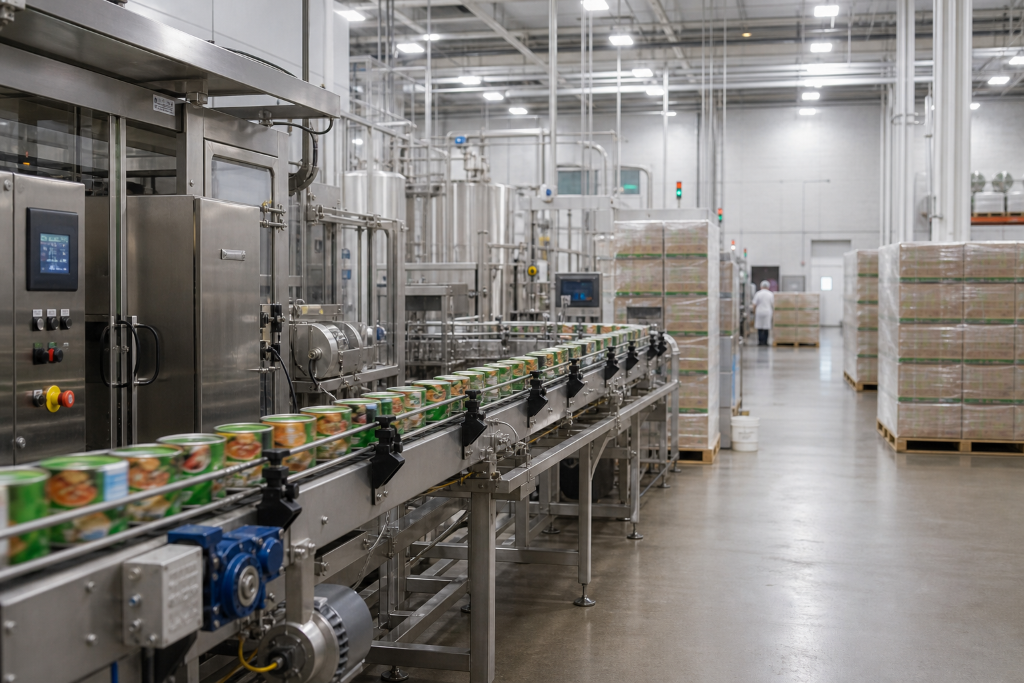
Companies in regulated industries such as pharmaceuticals, food and beverages, and electronics must comply with a wide range of regulations from the factory floor to the warehouse and beyond. They need to prove where materials came from, how they were processed, and when and to whom finished products were shipped.
An ERP system designed for compliance and traceability gives you the tracking, visibility, and reporting you need to meet these requirements confidently.
Why ERP is needed for compliance and traceability
Many businesses try to meet compliance requirements using standalone point solutions. These systems are costly to integrate and often create new data silos.
With modern ERP, compliance and traceability are built in as standard capabilities. You get a complete, fully integrated solution that connects departments and processes so teams can work from a single, auditable source of truth.
Compliance requirements
There are several critical areas where ERP helps you meet compliance obligations.
System security
ERP strengthens system security by authenticating users and defining clear roles and permissions. Knowing who can access which data or process step makes it easier to enforce controls and demonstrate compliance.
Procurement
Paper-based, manual procurement processes are vulnerable to control breaches and fraud. Using an online supplier portal inside your ERP system increases transparency, reduces document handling, and makes it easier to enforce approved processes.
Manufacturing
In production, ERP tracks how components and materials move through each process step. Lot-level traceability helps you identify specific batches of finished goods, isolate potential defects, and ensure that material requirements planning does not use expired or non-compliant items.
Warehousing and inventory
ERP-based warehouse management tracks the location and conditions of inventory items in real time. This helps confirm that products were stored correctly, supports retrieval of sub-standard stock, and flags items that are nearing or past their expiry date.
Quality control
An ERP system for regulated industries includes quality management that monitors the quality of materials, products, and the processes that affect them. End-to-end visibility across the value chain supports compliance and standards like ISO and QS by making it easier to report on processes and maintain certifications.
Supplier management
ERP enables structured supplier management, with processes to monitor, evaluate, and rate suppliers against defined standards. Clear guidelines and expectations help reduce the risk of supplier non-compliance.
Traceability requirements
Many international regulations require detailed tracking across the entire value chain. Food and beverage manufacturers often need ingredient-level traceability, while electronics manufacturers rely on lot traceability to meet health and safety rules.
Effective ERP traceability supports both forward and backward tracking with automated documentation, reducing the manual effort required from your teams. You can see who handled a product, which equipment and operations were involved, and which materials were used and where they came from.
Effective traceability is implemented by integrating several functions of the organization.
- A warehouse management system with functionality to track serial numbers, lots and bin locations and management of serialized stock items
- Inventory management that records traceability and quality data of materials and products
- A manufacturing operations management system that allows companies to measure and monitor product quality.
- A customer complaints capability for capturing, managing and resolving customer issues, including the review and escalation of product defects to enable recalls and prevent future problems.
Recalls
Recalls are increasingly common and costly in regulated industries. ERP-supported traceability should include the ability to run both real and mock recalls quickly and accurately.
By simulating recalls, you can improve governance and quality systems, shorten recall execution times, and meet regulatory reporting requirements with confidence.
Food traceability requirements
Food manufacturers must comply with legislation such as the Food Safety Modernization Act and Safe Quality Food Standards. This requires full visibility of every ingredient from receipt and storage through processing, packaging, shipping, and delivery to the customer.
ERP must provide detailed audit trails and support an effective recall process to demonstrate compliance.
Electronics traceability requirements
For electronics manufacturers, lot traceability is essential to comply with health and safety regulations. With ERP, they can track products, materials, and processes at each stage, simplifying quality control and enabling efficient, targeted recalls.
How an ERP improves compliance and traceability
Manufacturers operate in an environment where regulations are stricter and more prevention-focused than ever. Meeting these expectations requires consistent monitoring and reporting across departments.
By integrating processes across the organization, an ERP system for compliance and traceability ensures that no area goes unchecked. It provides auditable, end-to-end records for government, industry bodies, legal stakeholders, partners, and customers. This helps you prove compliance and protect your brand.