Manufacturing companies already know that digital technologies, such as the Internet of Things and Industry 4.0, are transforming the way the industry operates. For many, however, figuring out where to begin the digital journey remains a challenge.
These disruptive technologies are often viewed as aspirational and talked about on a macro scale, so it’s reasonable to ask how you can start applying them in a way that immediately streamlines production processes on the shop floor.
Although supportive technology solutions are certainly at the core of digital transformation, the starting point is not to implement the software. First, you must recognize and evaluate inefficiencies preventing you from accomplishing your business goals, such as:
- Inability to provide realistic delivery dates: This is a classic sign that Production does not have visibility of load and capacity, and/or materials availability, and therefore cannot promise accurate delivery dates to Sales.
- Delayed deliveries/shipments: Although Production may have a plan, manual and disconnected systems result in the inability to execute the plan smoothly. Delays are caused by issues such as material shortages, insufficient capacity, too many changeovers, and quality problems.
- Absence of live job status: Without a real-time view of job status, you are unable to identify problems quickly and react. Getting updates via paper or informal verbal communication results in delays and inaccuracies. Finding out about yesterday’s problems today is too late.
- Inaccurate job costs: In every manufacturing industry today, margins are under pressure from competitors – both local and global. If you cannot capture labor and material costs accurately and in real-time, you will not have visibility of your margins. And without visibility, you cannot take corrective actions, which means profits suffer.
- Downtime: Both planned downtime (for scheduled maintenance) and unplanned downtime (such as machine jams or part failures) cost huge amounts of money. A predictive, data management approach can minimize these losses.
Reframe the Operations Strategy
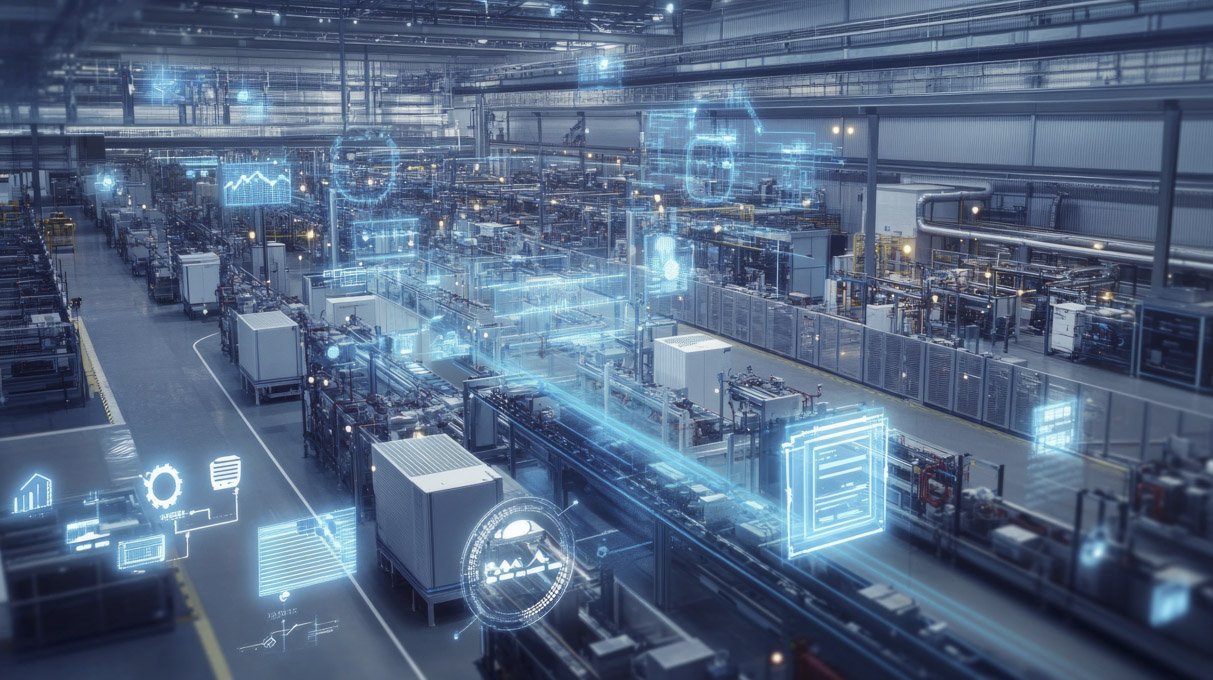
All of these challenges can be addressed by reviewing current business processes and identifying opportunities for improvement – then pinpointing where automation makes sense. Modern Manufacturing Operations Management (MOM) digital solutions are designed to help small to midsize manufacturers enhance efficiency by providing real-time visibility of processes in the plant.
Combined with the ERP system, a MOM system helps plant managers more granularly optimize production efficiency. It monitors multiple systems and processes simultaneously and includes essential features for relaying shop floor information and identifying opportunities for improvement across the following areas:
- Advanced planning and scheduling – A MOM solution allows you to create a realistic, achievable production plan based on actual available capacity and materials. You can easily sequence jobs by priority and increase efficiency by reducing changeovers. And since “Murphy’s Law” is alive and well in every plant, you can quickly revise the schedule to cater for unexpected problems.
- Shop floor data collection – Gone are the days of clipboards and paper reports. Digital transformation lets you capture data electronically. Operators can input data using devices such as touch screens and barcode scanners.
- Automation – Interoperability is at the core of digitalization. A MOM solution provides an integration platform that connects to machines, gathers practical data from those machines and analyzes the information.
- Performance tracking – With the myriad of real-time data points collected from the shop floor, MOM software provides a wealth of KPI’s and queries to allow managers to monitor progress and be notified of problems (such as equipment failure, changeovers, idle time, process defects, or scrapped parts) so they can take corrective actions. Industry standard KPI’s include overall equipment effectiveness (OEE) and overall labour effectiveness (OLE), with drill downs into downtime, bottlenecks, and quality losses.
MOM solutions are most effective when integrated with a manufacturer’s ERP system, as they provide holistic, consolidated records of all business transactions. The gains that follow from this collaboration are well-documented, including increased efficiency, lower costs, and eliminate the stress of “constantly fighting fires”.
SYSPRO’s MOM solution is a unifying, interconnected tool for managing the manufacturing process end-to-end, and is an important step on the journey to comprehensive digital transformation.
Click here to learn more about the benefits of MOM solutions and how to drive performance.