Manufacturers are adopting Fourth Industrial Revolution (4IR) technologies to become more flexible and responsive, and to make smarter, data-driven decisions. One of the key 4IR technologies is the
Internet of Things (IoT).
IoT can support manufacturing operations, and it can also make
inventory management
more agile and improve decision-making.
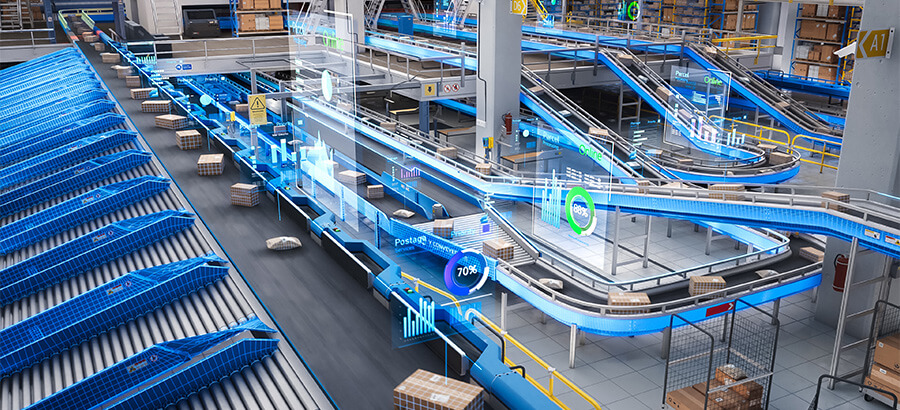
IoT works by connecting a network of devices and sensors to software systems, allowing them to communicate and share data. Tracking goods in real time in warehouses and across the supply chain can save time, improve warehouse efficiency, and reduce the risk of stock-outs.
How IoT works with inventory
Because inventory management is a key driver of profitability and cost control, active management is essential. How much inventory a company holds depends on demand, supplier lead times, manufacturing capacity, and stock-holding policies. In many businesses, these inputs are still managed through slow, manual processes. With IoT-enabled inventory management, much of this information can be accessed in real time, enabling faster and better decisions.
When integrated into an ERP system, IoT data can be centralised to create a single source of truth for the enterprise—helping to improve efficiency, reduce waste and cost, and enhance customer service.
Six benefits of IoT for inventory management
- Determine inventory availability
Businesses can gain detailed, real-time visibility into inventory across multiple locations—stock levels, condition, and status. This improves decision-making and helps prevent shortages and overstocking. In a crisis, this level of detail can be critical. - Automated replenishment
IoT sensors can trigger replenishment when inventory drops below a predefined threshold, automating ERP workflows to prevent stock-outs while optimising inventory levels. - Supply chain optimisation
IoT data can improve transportation, warehousing, and distribution by providing real-time visibility into inventory levels and locations across the supply chain. It can also strengthen collaboration between manufacturers, suppliers, and distributors—helping teams align deliveries with production schedules and enhance logistics to boost overall efficiency. - Enhanced warehouse management
IoT sensors can track item locations within a warehouse to optimise storage space, flag stock approaching expiry, and improve picking efficiency. Inventory counts update automatically, reducing the need for manual stocktaking. - Improved decision-making
Capturing real-time IoT data in an ERP system helps identify trends, forecast demand, and support more informed inventory decisions. - Better efficiency and productivity
IoT-enabled inventory management reduces manual stock reviews and speeds up item searches. This frees teams to focus on higher-value work, improving productivity and driving cost savings.
Pre-requisites for using IoT with inventory
Before a business can adopt an IoT-based inventory management approach, it needs the right infrastructure in place.
Manufacturing ERP
IoT generates data at an exponential rate, and managing this volume effectively is becoming critical. One way to handle the “data deluge” is through a manufacturing ERP system. ERP helps automate processes, supports inventory management, and delivers up-to-date visibility into critical business operations—making it easier to streamline inventory workflows.
Beyond internal benefits, an ERP system can also share data across the broader business ecosystem. This can unlock additional value, improve collaboration, and accelerate innovation.
Cloud infrastructure
Most manufacturers don’t have on-premise infrastructure capable of handling IoT data at scale. Cloud services (for example, Microsoft Azure IoT Hub) can help manage IoT devices—connecting and monitoring devices wherever they are, and enabling central configuration, device control, settings changes, and firmware updates.
A
manufacturing ERP
that supports IoT should be able to receive and manage IoT messages (often via a message queue), aggregate and analyse incoming data, and structure it into a format that enables accurate, real-time reporting and decision-making.
Using IoT to manage inventory in an ERP
Digitising manufacturing processes with IoT is typically a long-term initiative. An ERP system can help manufacturers prepare for these changes, and extending an IoT programme to include inventory management can amplify the benefits across the business.